

Students and Professors listening to a guide in Rwanda, standing at a river’s edge.
Collaboration Among Educational Institutions on Three Continents Brings Global Perspectives to Students
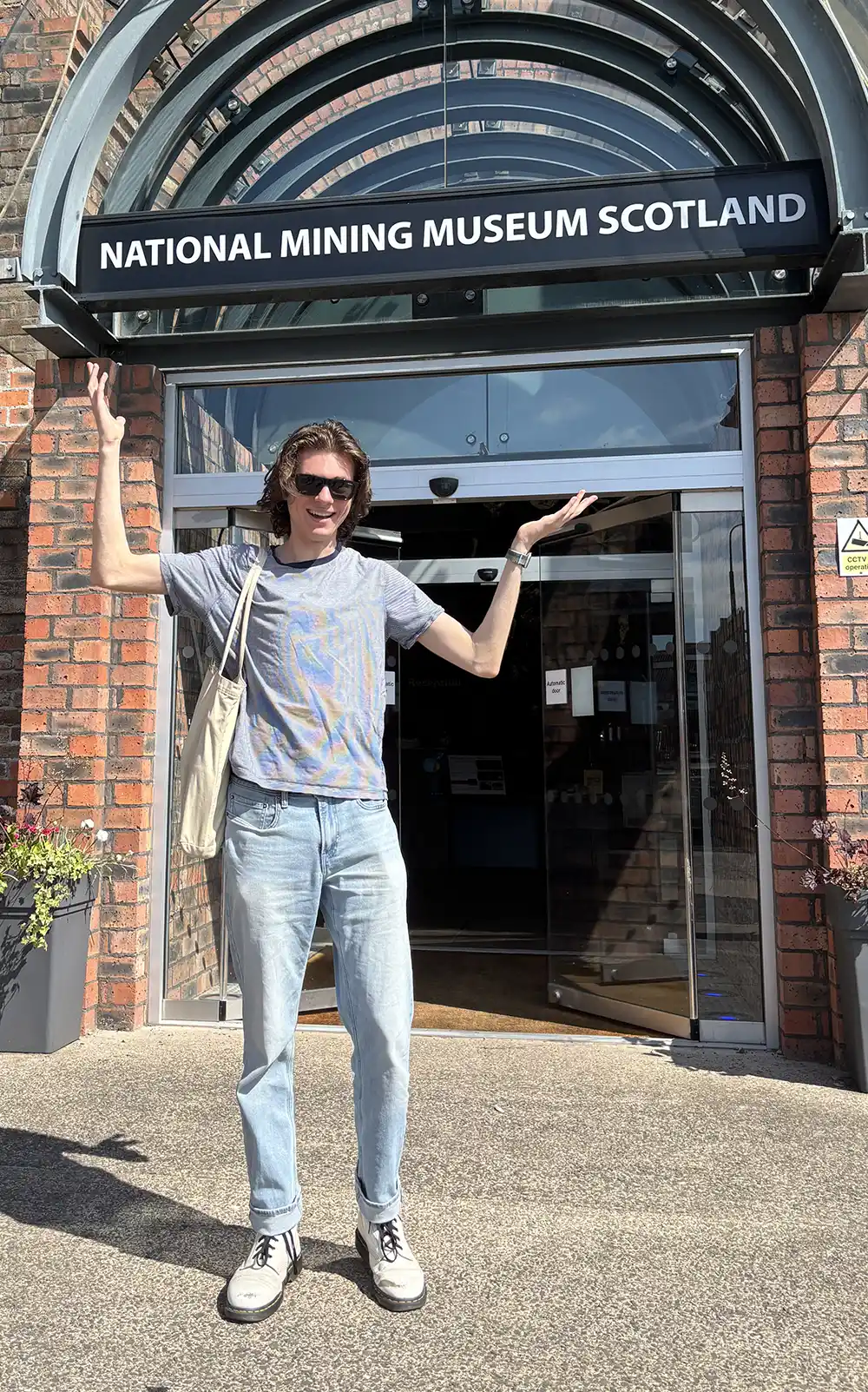
Meanwhile, 4,400 miles northwest of the UGHE campus, a Vassar student spent seven weeks at The University of Edinburgh in Scotland as the first participant in a partnership between the two institutions that will enable him and others to earn a master’s degree in planetary health from The University of Edinburgh.
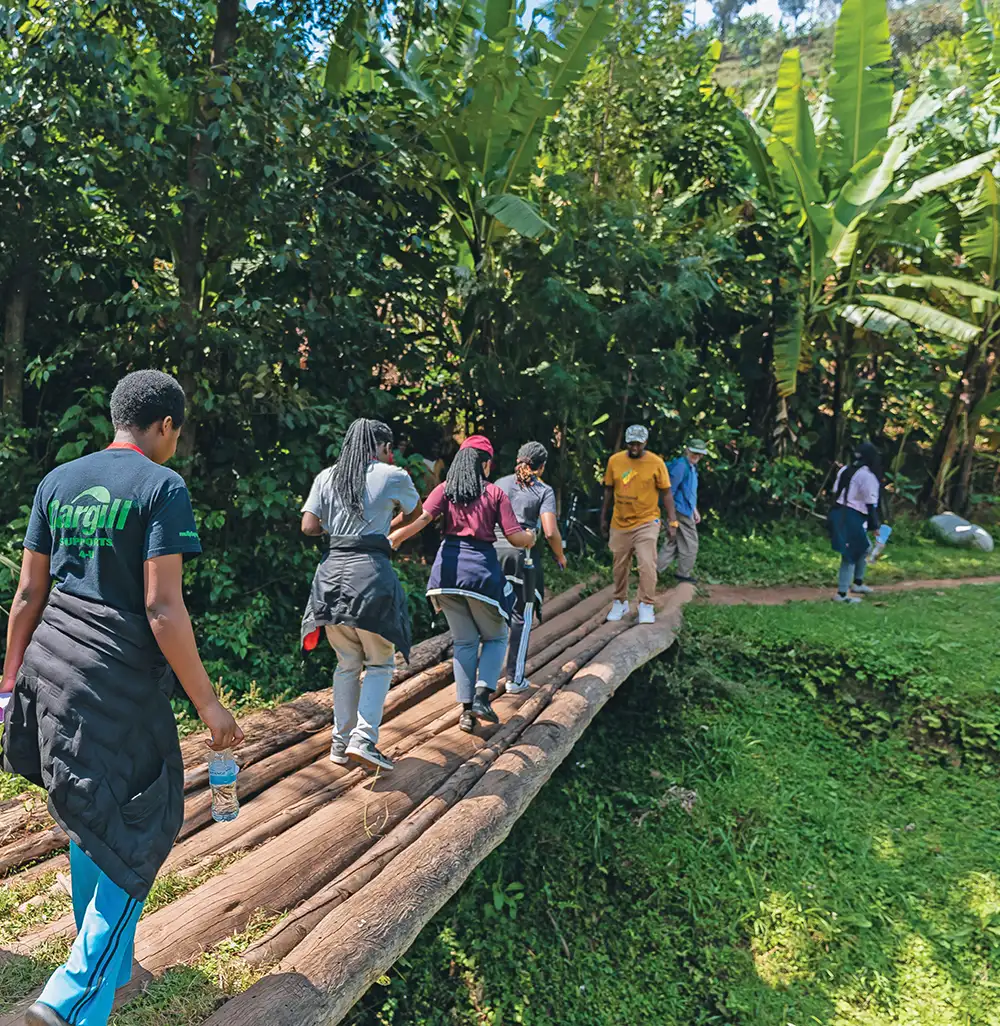
To teach Blue Rwanda, a course on the role water has played in African history and culture, Professor of French and Francophone Studies Thomas Parker collaborated with Dr. Denis Regnier, Lead Faculty for Global Health Equity and Social Medicine and an Associate Professor in Anthropology at UGHE; Dr. Rowan Jackson, Lecturer in Planetary Health and Food Systems and Co-Director of MSc Planetary Health Programme at The University of Edinburgh; and Professor of Geography Mary Ann Cunningham.
Parker, who was making his third trip to Rwanda, taught the first portion of the course on water as an “intensive” offering at Vassar, then completed the course with approximately 30 UGHE students and six of the Vassar students who had enrolled in the intensive.
“We looked at the environmental and religious aspects of water as well as how it is viewed in traditional medicine and how it relates to gender,” he said. Parker also led the group on field trips.

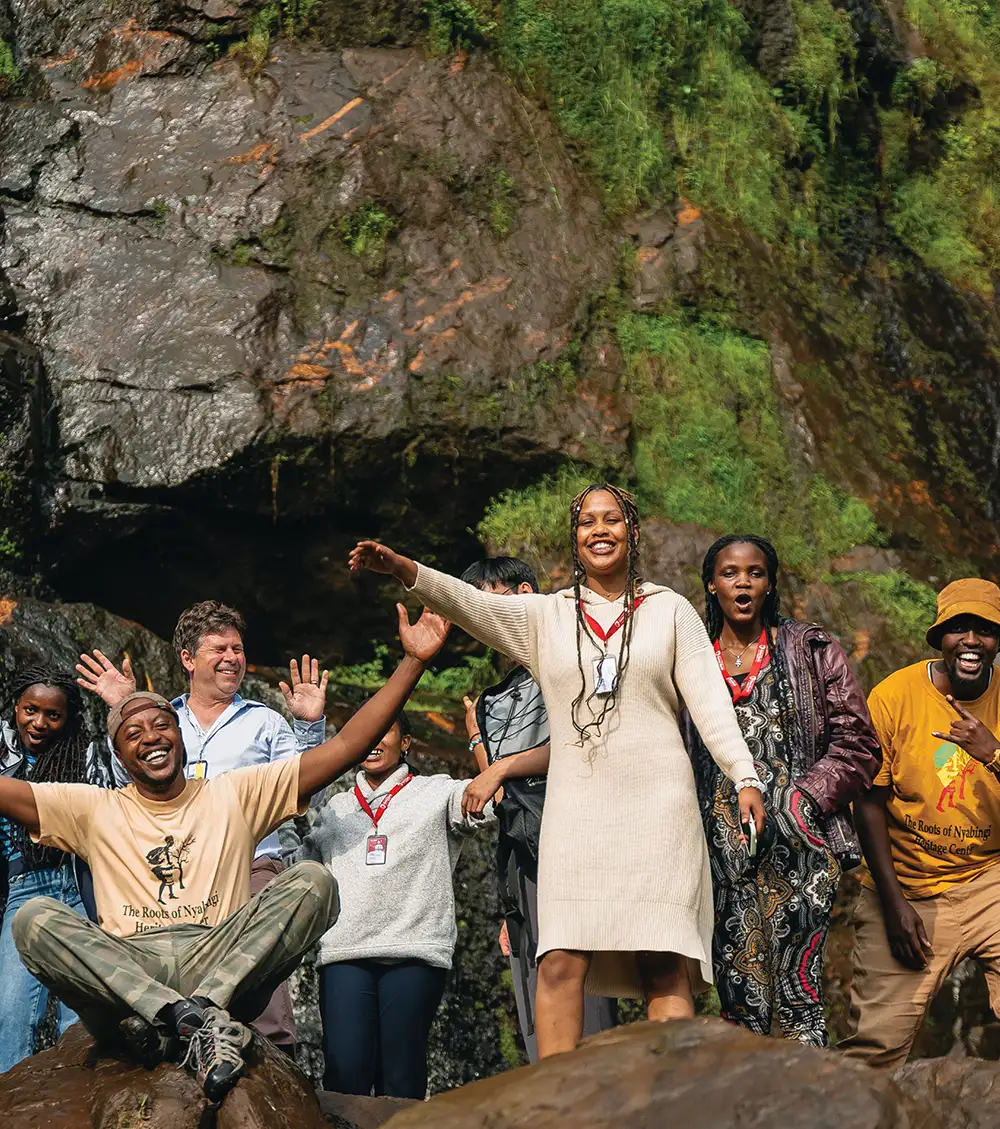
Anne Brancky, Associate Professor of French and Francophone Studies and Faculty Director of the Global Collaborative for the Liberal Arts, made her second trip to Rwanda to facilitate field trips and to teach a module within the course on the relationship between water issues and gender in African nations. “Gender roles vary around the world,” Brancky said, “so we looked at how different cultures view these roles as it pertains to water.”
Brancky noted, for example, that in many African villages, the women are expected to carry water, often from sources far from their homes. And this cultural phenomenon has led to bonds among women in these villages, affecting the culture of those communities.
Cunningham said her experience at UGHE not only benefited the students there but would also benefit her students at Vassar. “It’s good to learn about things outside the USA bubble,” she said. “More of the world is like Rwanda than like the United States. It made me more aware of finding ways to integrate this kind of information into my own classes at Vassar.”
Olivia Yost ’27 said she learned about the opportunity to take the trip to Rwanda from Lisa Pace, Associate Director for Pre-Health and STEM Advising, who has guided her on her pre-med journey at Vassar.
Pace also made the trip to Rwanda. “I wanted the opportunity to expand my knowledge about global public health issues, and water is a big part of health issues in Africa,” Yost said.
Maxwell Mhlanga, UGHE’s Head of the Humanities and Social Sciences Department, said Vassar’s partnership with UGHE had provided students “with a unique opportunity to engage directly with global health education and practice in a low-resource, community-based setting. Through immersive experiences at our campus, [Vassar students] are gaining a deeper understanding of health equity, social determinants of health, and interdisciplinary approaches to problem-solving beyond the traditional classroom context.”
It has been incredibly rewarding to watch Vassar students and faculty engage with UGHE’s students and faculty,” Mhlanga added. “The interactions were marked with genuine curiosity, mutual respect, and a shared commitment to social justice and health equity.” Hear about one student’s summer experience in Rwanda.
Meanwhile, in Scotland, Demetri Sedita ’26 was learning about environmental issues facing local communities near the Edinburgh campus. “I studied how Scottish local governments are planning to address climate change,” Sedita said. “Studying climate change and how to combat it has been a longtime passion of mine.” He now has the opportunity to return to The University of Edinburgh next fall for a year of study to complete his master’s program.
Dr. Rowan Jackson acted as one of Sedita’s advisors during the summer. “It was delightful having Demetri join Edinburgh as a visiting student for the inaugural Edinburgh-Vassar program,” Jackson said. “Demetri worked with academics and practitioners between the Edinburgh Futures Institute and the Edinburgh Climate Change Institute to assess local governments’ progress in enacting climate change targets. The work he produced will help them identify good practices.”
President Bradley noted that Ahmedabad University in India recently joined the group of participating schools. Members of the Global Collaborative will soon meet to discuss what’s next for the three institutions. The partners are making plans to teach a course at their colleges with similar public-health themes, then convene at UGHE in March.