

For Students, Study Abroad Starts With
Letting Go
here is little that compares with the heady excitement, anxiety, and anticipation of leaving the familiarity of Vassar’s campus to study in a wholly new environment—a place with a different culture, traditions, and, perhaps, language. But it is exactly what 50 percent of all Vassar students choose to do at some point during the course of their undergraduate education. Each year, Vassar’s Office of International Programs works closely with faculty who play a major role in advising and supporting around 300 students, finding which of the 135 programs in 25–30 countries will help further their individual academic and personal goals. To do so, the College creates and oversees many international programs, often with faculty on the ground, and also works in partnership with other institutions to help increase the range of offerings.
“The College’s investment in study-abroad programs demonstrates our belief in the value of global learning to a liberal arts education,” said Kerry Zuccaro, Assistant Dean for Global Partnerships and International Programs. “The more diverse and meaningful opportunities we create with international institutions, the more innovative opportunities there are for students. And it pays off—half of our students take advantage of these opportunities, compared with 11 or 12 percent from other colleges and universities nationally.”
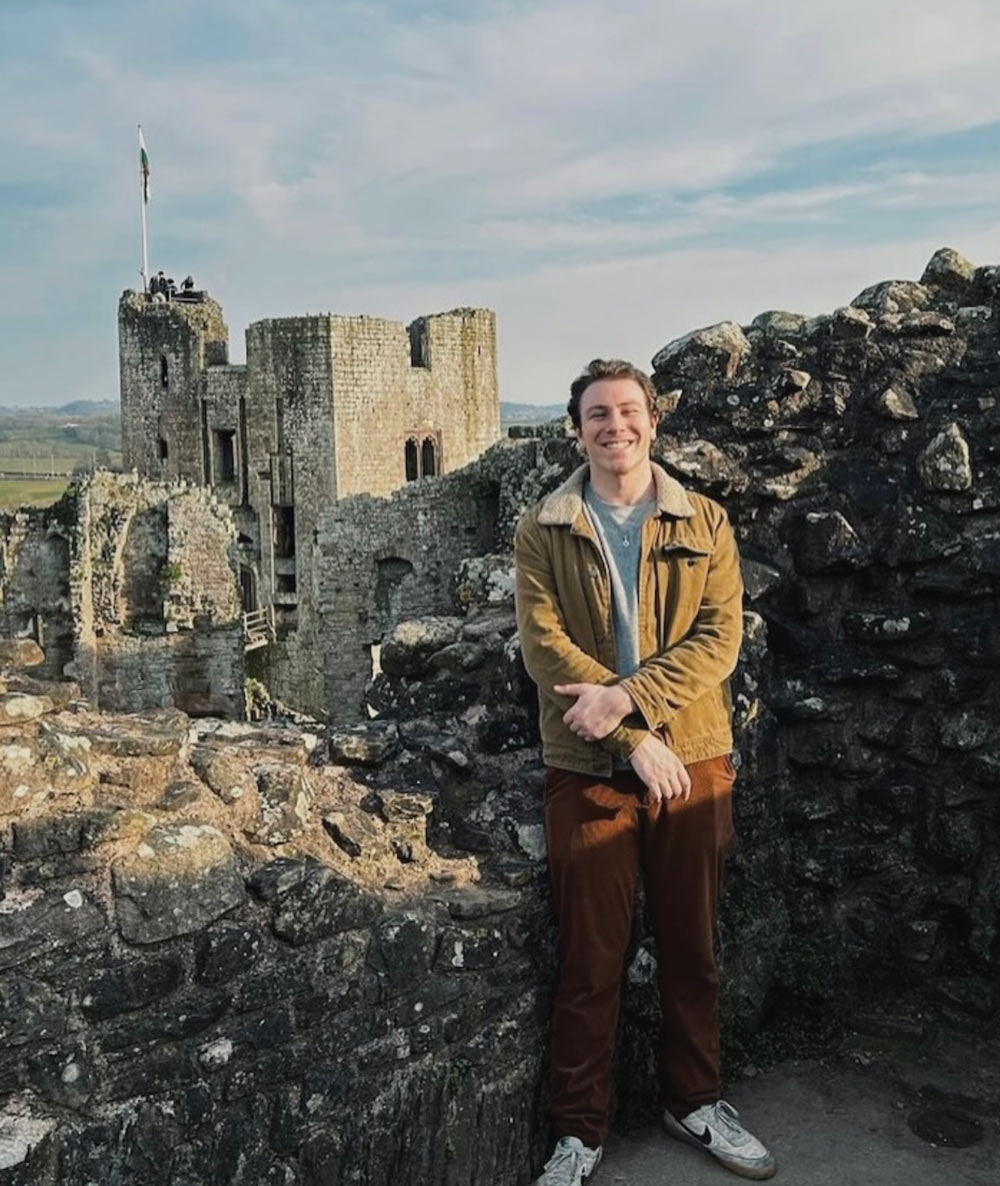
Worcester’s tutorial system came as a bit of a shock to the English major with a minor in film, with students meeting individually with professors who assign readings and discuss students’ weekly essays. Although it took some adjusting, Siegel found he loved the depth of the one-on-one interaction, so much so that he is already thinking about returning to pursue graduate work.“The experience was fully new to me but not as intimidating as I feared,” he said. “It teaches you to get good at arguing, to sell your subject in a persuasive way, to support your own claims. I learned a lot about how to schedule my own time, do my own research. Now I hope to pursue a master’s, hopefully at Oxford or maybe in the U.K., and then maybe work toward a PhD, if I’m lucky, which, coming in, I did not plan on doing.”
The independent nature of the tutorials pushed Siegel to look for ways to connect with other Worcester College students, which he did by joining a rowing team and taking part in a writers’ group. He met other American students through the Institute for Study Abroad, the program’s partner organization, and took the initiative to become familiar with the booksellers and shopkeepers in the city of Oxford, and the easy to access and affordable arts and culture of London, Paris, and Belgium.

“They were awesome, but I was so unsure at the start because they did everything for me,” Butts said. “They made meals, made my bed, cleaned my bathroom, and did my laundry—I’ve been doing my own laundry since middle school!”
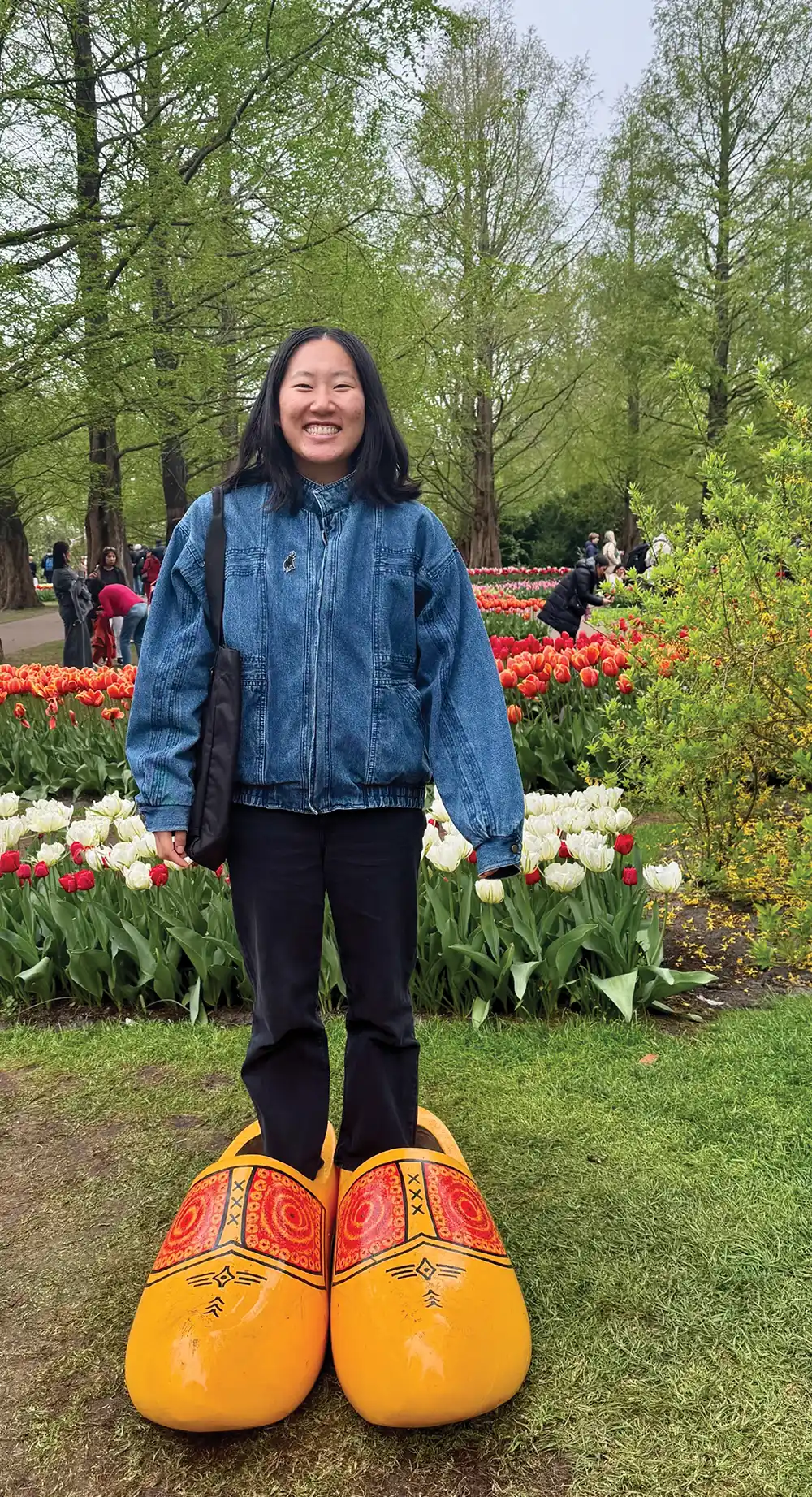
Making her way around a large, diverse university with multiple campuses across the city of Amsterdam and traveling solo on weekends left Lee with an appreciation of public transportation and the appeal of different neighborhoods. It also gave her a taste of the kind of city she’d like to live in after graduation.
“When I went to Paris, it was a big challenge to be alone, to sit undistracted with my own thoughts,” she explained. “Once I got past the discomfort of being alone, I felt I had gained another skill to keep in my back pocket.”
Lee was also surprised by the quality of friendships she made in four short months abroad. “Getting to know people outside of familiar circumstances resulted in some lasting friendships, which was surprising,” she said. “Now it’s exciting to be back home and making plans with people across the United States.”
Trinity College in Dublin spoke to senior Talia Fiore’s love of literature, and she chose to spend both semesters of her junior year there to sink into the experience of living independently, with enough time to travel and explore Ireland.
“I had heard that going for just one semester can really feel cut short, and being there for the year really gave me the chance to settle in,” she said. “It was the little things that got me—grocery shopping and other aspects of daily life, including [hearing] Gaelic—that drove home that I was in a place that wasn’t super different, but just different enough.”
Matthew Leone ’27, who is currently studying in Argentina through the Institute for Study Abroad, opted for an internship with Fundación Éforo in addition to his classes. He is working with high school students from Buenos Aires learning about politics and civic engagement. Improving his Spanish was at the top of Leone’s list of reasons for going to Argentina. But like most of his fellow study-abroad students, Leone continues to be up for the challenge inherent in leaving the familiarity of campus life in exchange for the unanticipated growth and insights that come with being open and curious about living in a new culture.
“Going about life as the one who is the foreigner, not a tourist, has given me a whole new level of appreciation for our shared humanity,” said Leone. “Even after just a short time here, what I see are our similarities more than our differences.”