

Kelly Marsh
From The Onion to AI
The first Signature Program of the 2025-26 academic year, “Storytelling for Change: Shaping and Sharing Inclusive Narratives in Higher Education, Media, and the Arts” posed the question: “How do we tell impactful stories about the things that matter most, and ultimately, strengthen our relationships to each other?” It was convened by Associate Professor of Psychological Science at Vassar Dara Greenwood and Victoria Grantham, Vassar’s Vice President for Communications.
Preserving our Ability to Live and Learn
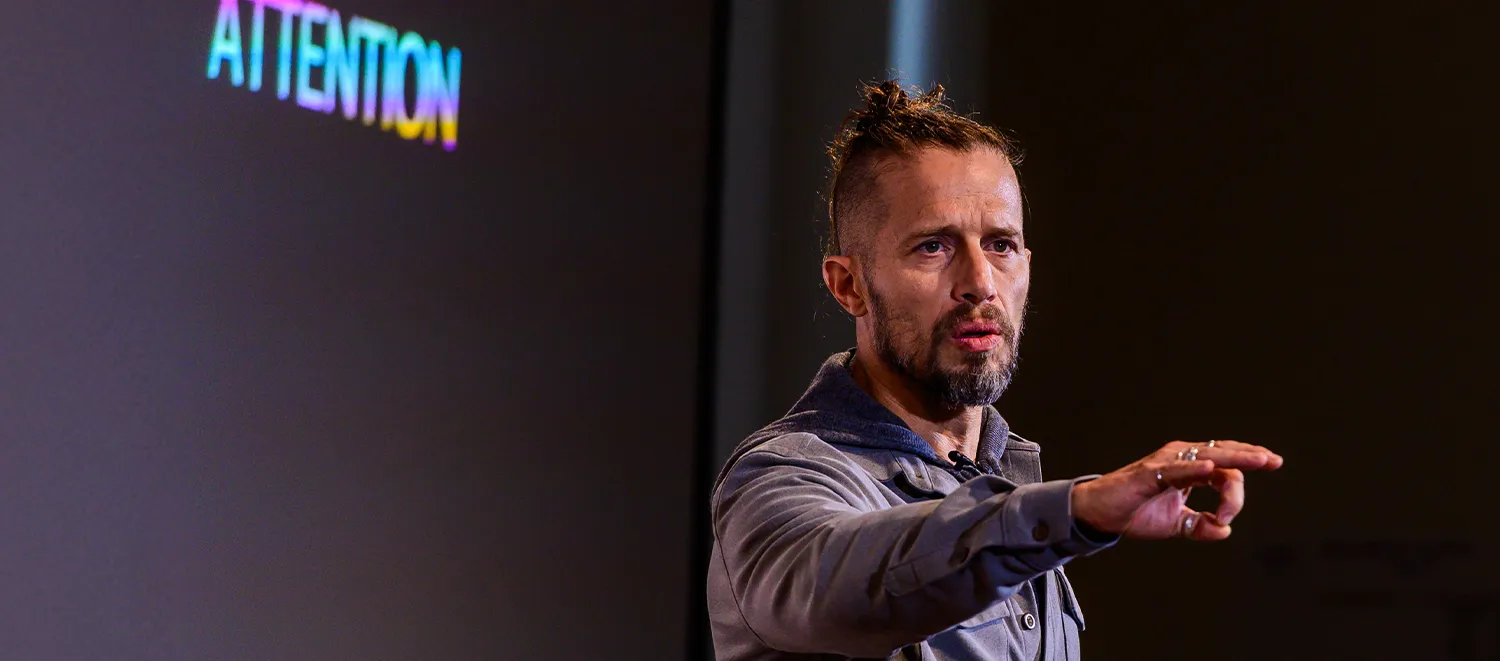
“If we’re going to preserve our humanity and preserve our ability to teach and learn and share stories over the next 20 years, we need to remember how diverse and constitutive of our humanity our attention actually is,” Burnett concluded. “We need to get some new forms of collective action pushing back, and it’s going to take all hands on deck.”
After his speech, he sat down for a conversation with Minerva Tantoco ’86, an early pioneer in AI, holder of four AI patents, and CEO of City Strategies Consulting.
Breaking Down Walls Between Academia and the Public
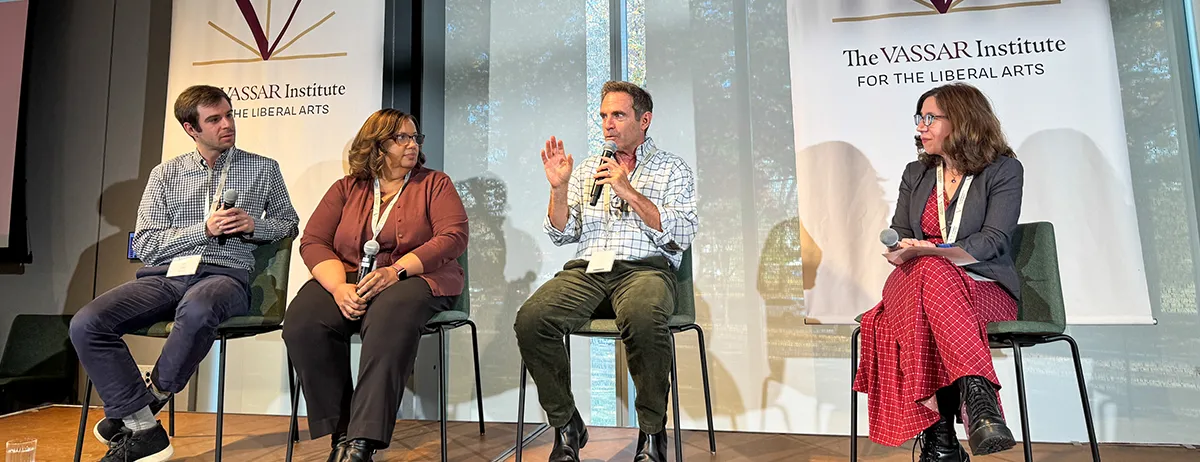
Panelists included Greenwood, who writes a blog for Psychology Today and whose work has been published in numerous other periodicals; Michele Tugade ’95, Professor of Psychological Science on the William R. Kenan Jr. Endowed Chair, whose research has been published in numerous mainstream outlets; and Robert K. Brigham, Shirley Ecker Boskey Professor of History and International Relations, who has published 11 books.Wes Dixon, Deputy to the President and Secretary of the Board of Trustees, who hosts a Vassar podcast Conversations @ the Salt Line, moderated.
Greenwood made a link to practices that she follows in the classroom—having students make meaningful connections between observations in everyday life and research findings. Brigham said one of his books about his personal history as someone who grew up in the foster care system placed a spotlight on this important national issue. And Tugade talked about applying her work on resilience to real-world problems and audiences, citing her work with astronauts to help them cope with loneliness and stress during trips in small spacecrafts.
Illuminating Critical Stories and Perspectives
Telling stories has always been a way humans connect with one another, panelists said. Marcus, whose podcast has more than 25,000 listeners and 7 million downloads from people in 200 countries, said, “I love to tell stories—tragic or happy. They help to bring us together and find comfort in each other.”
Telling stories on a public platform can take its toll on the storytellers though, said Clemetson, whose organization provides The Knight-Wallace House—a place for journalists and others to take a break from their demanding and sometimes traumatic work to recharge and focus on meaningful projects.
Gillis said he believed that injecting humor into storytelling can make both mundane and disturbing topics more palatable and relatable.
Carina Cole, a media studies major and Editor-in-Chief of The Miscellany News, said the panel was encouraging. “I think there is a lot of fear surrounding going into this profession right now, understandably, but having examples of people who have succeeded in making careers out of storytelling is invaluable. Just being able to see there are still options for people interested in this career path is important.”
Assorted
Understanding the Current Story of Life After College
In an interactive session titled “Whose Story Is It?” Stacy Bingham, Vassar’s Associate Dean of the College for Career Education, Vassar and Jannette Swanson, Director of External Engagement for Vassar’s Center for Career Education, led attendees in an iterative exercise about the liberal arts and careers.
Courtesy of the subject
Engaging Audiences’ Hearts and Minds Via Live Performances
Building Connection and Community Through Shared Experiences
Greenwood and Grantham were pleased that the varied backgrounds and perspectives of the speakers and attendees had sparked such lively discussions.
“Whether it was from a Poughkeepsie organizer saying that the keynote speaker spoke to her soul, or people tearing up at the theater performances and laughing at Onion headlines, it seemed participants were truly present and engaged,” Grantham said. “I think it’s really important to underscore that stories have the power to move us—in addition to helping us think about things in a different way.”
Greenwood said the ideas sparked at the event would continue to be discussed in other forums. “We saw broad swaths of people connecting with each other and sharing experiences and insights,” she said. “They wanted to keep the conversations going! We plan to follow up with all involved to see where their insights about storytelling and community will take them. Ultimately, the event seemed to tell its own story about how hungry we all are for authentic engagement with each other and with the world around us.”