
Lessons That Transcend Borders

Courtesy of Madeleine Paternot ’95
International Internships and Fellowships Offer a Taste of the World
by Betty A. Marton
Nestled nearly 5,000 feet above sea level in the Swiss Alps, Verbier is a small village best known as a winter ski area. But it is also home to the Verbier 3-D Foundation Sculpture Park, founded 15 years ago by Madeleine Paternot ’95 and her partner, Kiki Thompson. It is a place where art and ecology meet the mountain, where artists-in-residence are invited to engage with the local culture and find creative, ecologically friendly ways to use materials and install their sculptures in the park. And it is where eight Vassar students have spent the past two summers learning about sculpture, the environment, and how to support a working artist, both hands-on and behind the scenes.
The fellowships and internships that support students in pursuing language study and gaining professional experience abroad are invaluable in helping them step outside of the U.S.-centric context and gain new perspectives.”
—François Olivier,
Director of Fellowships
Many of the qualities the Verbier 3-D Foundation seeks in their internship candidates are specific to the work they do supporting an intensive six-week outdoor sculpture residency: The foundation looks for art majors who can handle a range of challenging environments, both on the mountain and in the office, and who can be comfortable with village locals as well as celebrity artists. While each of Vassar’s internship and fellowship programs is designed to align with and promote students’ specific academic goals, the qualities of adaptability, reliability, and positivity that Paternot has seen in her interns reach across the disciplines and countries to characterize how many students approach experiences available to them through Vassar’s varied international programs.

“The fellowships and internships that support students in pursuing language study and gaining professional experience abroad are invaluable in helping them step outside of the U.S.-centric context and gain new perspectives,” said François Olivier, Director of Fellowships, a position recently created to oversee the many opportunities available to students. “These experiences are central to the goals of a liberal arts education.”
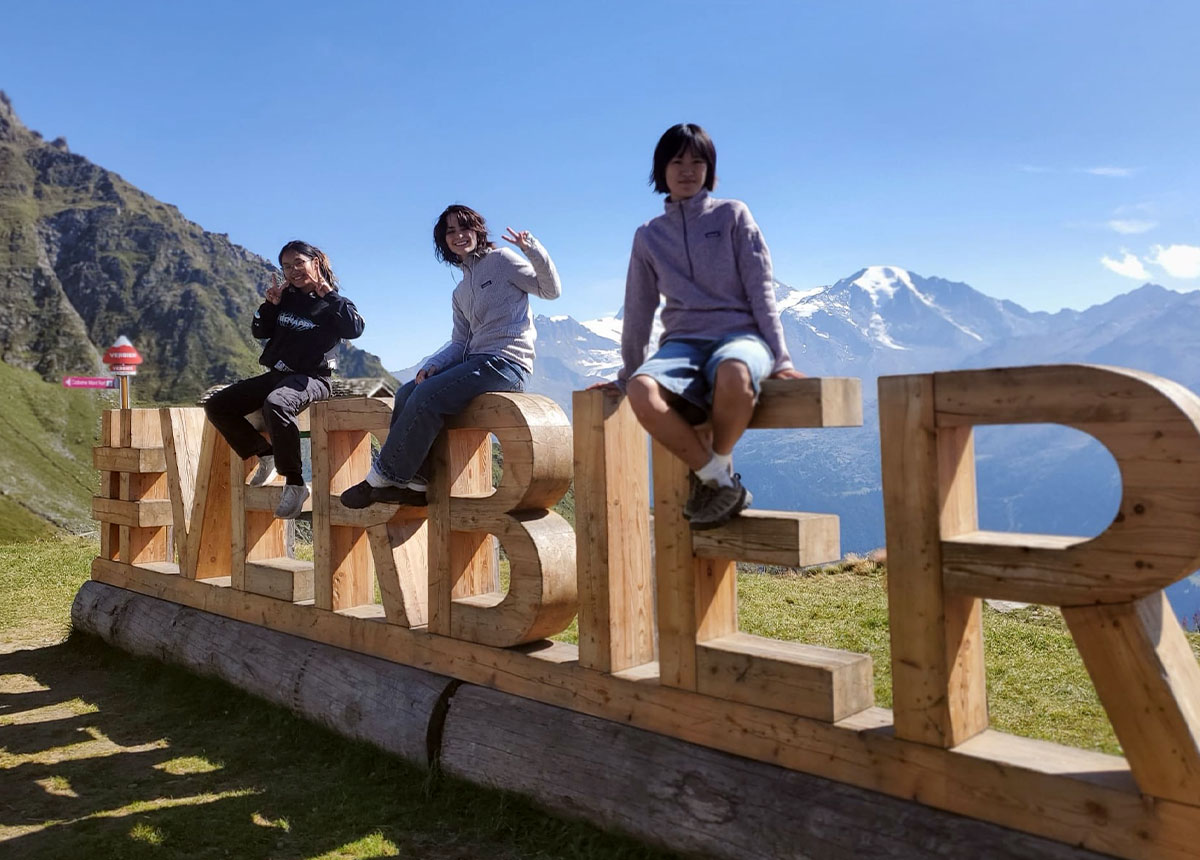
Three students sitting on a wooden sculpture reading “#VERBIER”, smiling and posing for the picture.
Neo Wu ’27, Rachel Stanger ’27, and Lilliane Liu ’27 at the entrance of the Verbier Foundation Sculpture Park, which overlooks the Swiss Alps. The foundation hosted their internship.

Courtesy of Madeleine Paternot ’95

Art in the Alps

Verbier intern Rachel Stanger ’27 was one of 18 Vassar students to receive a grant to pursue an internship or professional opportunity abroad this past summer at a wide range of for-profit and nonprofit organizations. These placements provided not only professional and academic experience but also cultural immersion. An art history major with dual minors in French and Francophone studies and chemistry, Stanger, along with five other interns from Vassar, received support from the Verbier 3-D Foundation, which hosted students in groups of three. During her six weeks at Verbier, she assisted with studio management and pottery classes, learned about the intersection of art and environmentalism, and gained a much deeper understanding of the impact of climate change through the microcosm of the village and sculpture park and the work of the Native American interdisciplinary artist-in-residence, Cannupa Hanska Luger. Stanger came to appreciate the effort it takes to manage this one-of-a-kind sculpture park, where cows roam free, as well as what it takes for the artist to work in tandem with the Swiss government. Her work as a translator for the artist and his family also helped improve her language skills and connected her in unexpected ways with both the artist and the villagers.

Longing for Japan

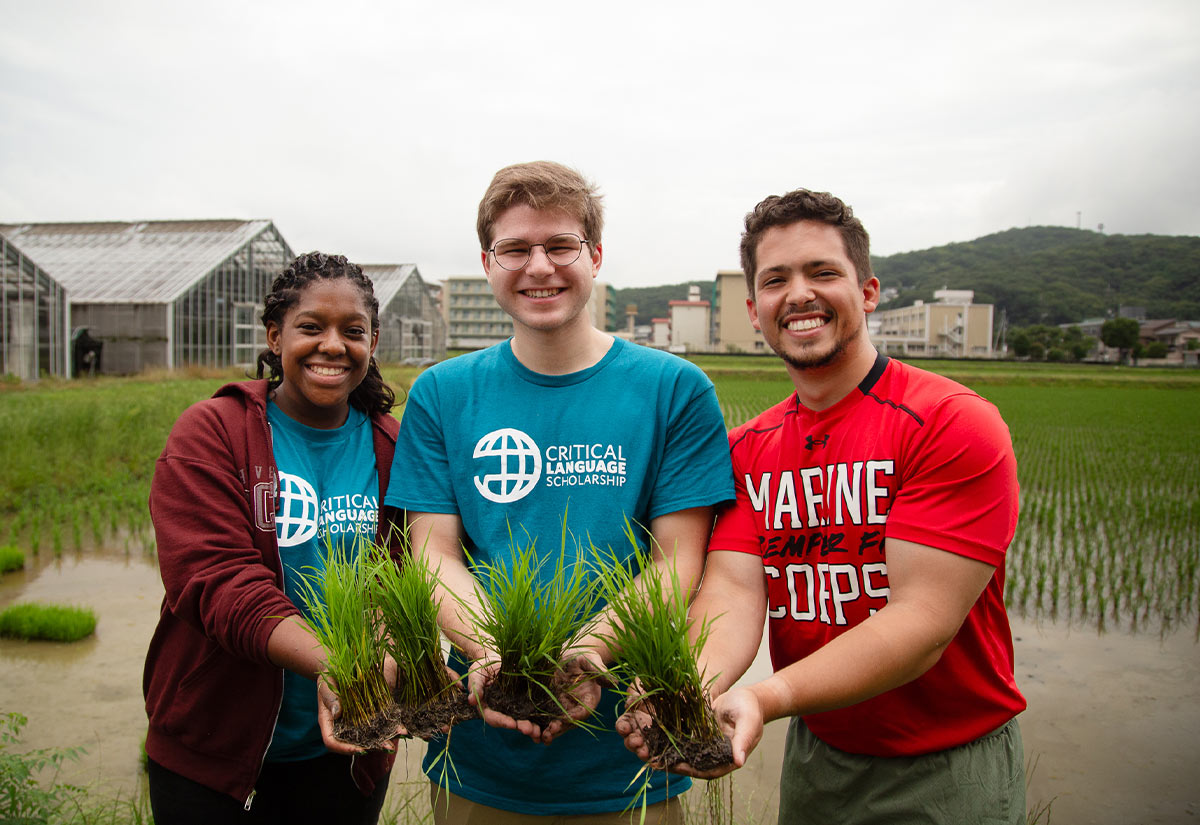
Growing up with Japanese friends in Hartsdale, NY, instilled a longing in Alex Graber ’27 to live in Japan, an experience he satisfied this past summer through a Critical Language Scholarship (CLS) funded by the U.S. Department of State that provides immersive summer programs for U.S. undergraduate and graduate students to learn languages of strategic importance to the country’s national security, economic prosperity, and engagement with the world. The eight-week intensive program Graber attended in Okayama included four hours of formal classes each day, one-on-one language practice with a Japanese student at Okayama University, cultural programming, and trips.
Alex Graber ‘27 planting rice alongside two fellow study abroad students from other schools.
Alex Graber ’27, center, tries his hand at planting rice alongside two American classmates.

Image courtesy of the subject

As a biology major with an interest in marine biology, Graber discovered firsthand the value of going outside of his field to explore a different language and culture. Although he also plans to study in Hawaii to fulfill the necessary credits remaining for graduation, he has his eye on the groundbreaking studies in animal communication emerging from Okayama. He hopes to return to conduct research there one day.

As a STEM major, Graber also believes that his interest in biology helped broaden his classmates’ perspectives—through simple acts such as pointing out plants and animals he knew or discussing why Japanese biological research isn’t widely publicized in American journals. He was also able to have fun with his Japanese roommates and language partners, some of whom are training to become English teachers, by sharing Western customs and teaching them English slang.

Spending time in Japan also gave Graber an opportunity to learn how to build and maintain relationships within his diverse cohort of American students who represented a broader cultural and political spectrum than he found at Vassar. “Learning to stay connected to people who don’t always agree was a crucial part of my experience,” he said, explaining that, as a queer man, he found new contexts for having self-respect, despite others’ perceptions.

Although developing the skills to navigate different cultures is a key part of any international experience, recognizing the cultural norms in Japan at times presented challenges. “They were tricky to learn, trickier to implement,” he said. Everything from distinctions in how to address different people depending on their social status to not acknowledging someone who sneezes, took some getting used to, he reported.
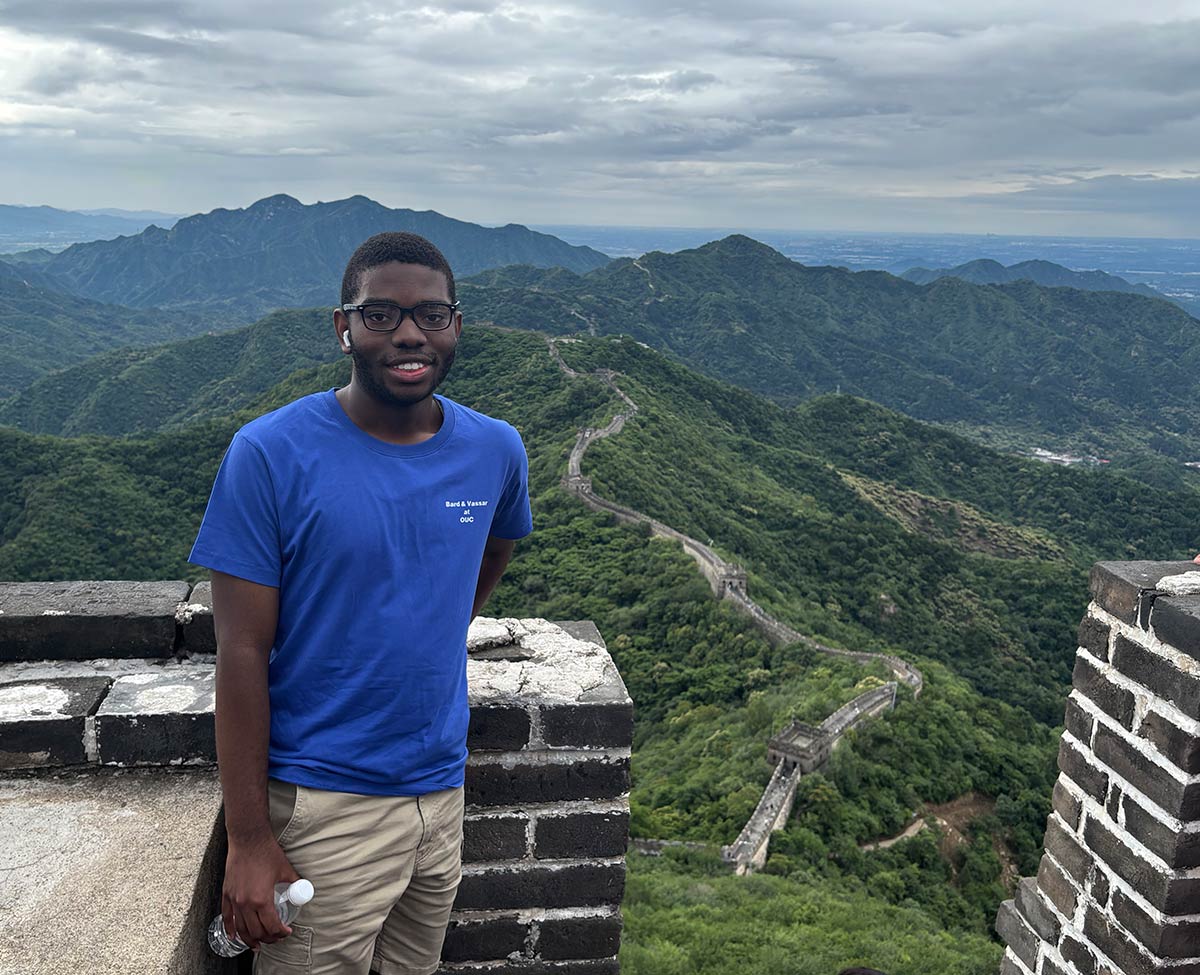
Aryon Turner ’28 standing at the Great Wall of China.
Aryon Turner ’28 surveys the Great Wall of China.

Image courtesy of the subject

Soaking in Chinese Culture

Another STEM student, Aryon Turner ’28, also recognized the value of immersing himself in a vastly different cultural and academic experience during his eight weeks in Qingdao, China. One of 12 students awarded an Ann Cornelisen Fellowship for language study this past summer, he lived with other Vassar students participating in the Bard College intensive language program at Qingdao University. In addition to four hours of Chinese language class and one hour of tutoring each day, he took classes in martial arts and studied guqin, an ancient stringed instrument.

He admits to being surprised by the friendliness of the people he encountered and how easy it was to explore a city with extensive public transportation. He appreciated the weekend trips led by professors from Vassar and Bard College to Jinan, Tai’an, and sections of the Great Wall of China in Beijing. And despite the challenges of studying a new language in such an intensive way, the program whetted his appetite for more travel and study abroad.

“Although I took elementary Chinese last year at Vassar, I struggled with the classes here—it’s such a different language,” he acknowledged. “But the immersion aspect really helped, so I was able to see some improvement. And it helped that the Chinese people were really willing and patient with me.”

Experiencing Brazil

Nia Bethel-Brescia ’25 learned a lot about potential fellowship options during her work-study at Vassar’s Center for Career Education (CCE). She applied for the Cornelisen Fellowship because of the freedom it affords to live and learn a language outside of the United States, and chose Brazil to experience the country’s strong Afro-Brazilian culture firsthand, particularly through dance, which she had previously studied at Vassar. After living with a host family in the Copacabana neighborhood of Rio de Janeiro since last September, Bethel-Brescia plans to move to Salvador during the second half of the year to experience a different part of the country. A mixed-race woman who studied African American history, she completed her senior thesis on underground resistance movements and now, in addition to capoeira classes, is exploring quilombos—Brazilian communities created by enslaved people after the abolition of slavery.

“There was little exposure to any of that where I grew up in suburban Connecticut,” she said, explaining that she is thinking about a career in teaching or in museum education. “I think any career would be helped by having access to different languages and cultures.”
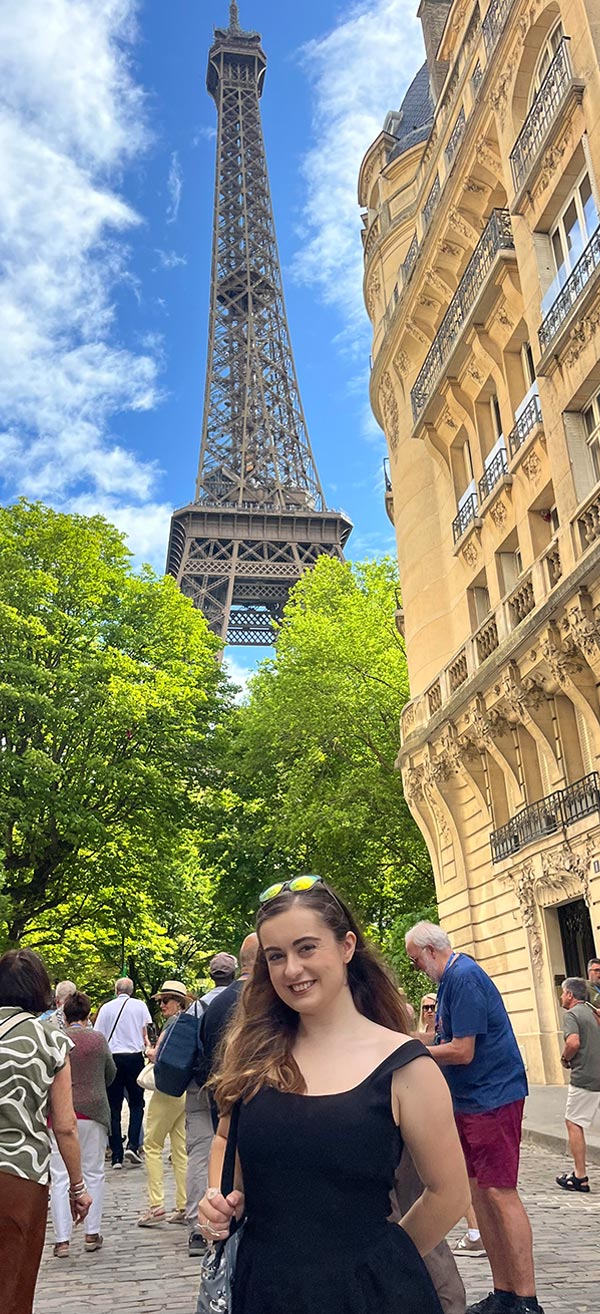
Olivia Arenberg ’26 posing in front of the Eiffel Tower in Paris.
Olivia Arenberg ’26 sees the sites in Paris.

Image courtesy of the subject

Olivia Arenberg ’26 posing in front of the Eiffel Tower in Paris.
Olivia Arenberg ’26 sees the sites in Paris.

Image courtesy of the subject

An Appetite for Travel

A study-abroad semester in London during the fall of 2024 whetted senior Olivia Arenberg’s appetite for international study and travel. Having previously made deep connections with other international students, sampled a wide range of classes, and tasted the freedom of traveling with friends, Arenberg ’26 knew more of what she wanted out of her next experience. So, when her advisor suggested that she look into a program in France, she carefully researched her options and applied to the Marlene Shepper Cooperman ’63 Memorial Fund to obtain financial support for the Rutgers Summer Program in Paris. With concentrations in international studies, French, and media, the program she chose offered classes in French theater and documentary filmmaking, as well as excursions in and around the city.

“I didn’t want to be away for a semester or an entire year,” she said. “I have campus commitments that I didn’t want to miss out on—work-study, a stipend job, and extracurriculars like a cappella and dance—so this was perfect.”

Despite all of her planning, it was a combination of fate, luck, and persistence that led her to Sabaye Sok, a caricature artist whom she met at a Japanese festival near the Arc de Triomphe. The artist’s passion and career became the subject of Arenberg’s final project in the summer program.

Now a self-appointed ambassador for the CCE, Arenberg loves sharing stories about her time abroad as well as the value of the structure and guidance she received from her Vassar advisors.

“I’m really eager to let other students know about my experiences,” she explained. “I don’t think that a lot of students understand all the possible fellowship opportunities, so one of my key goals is to help demystify the process.”

Choosing South America
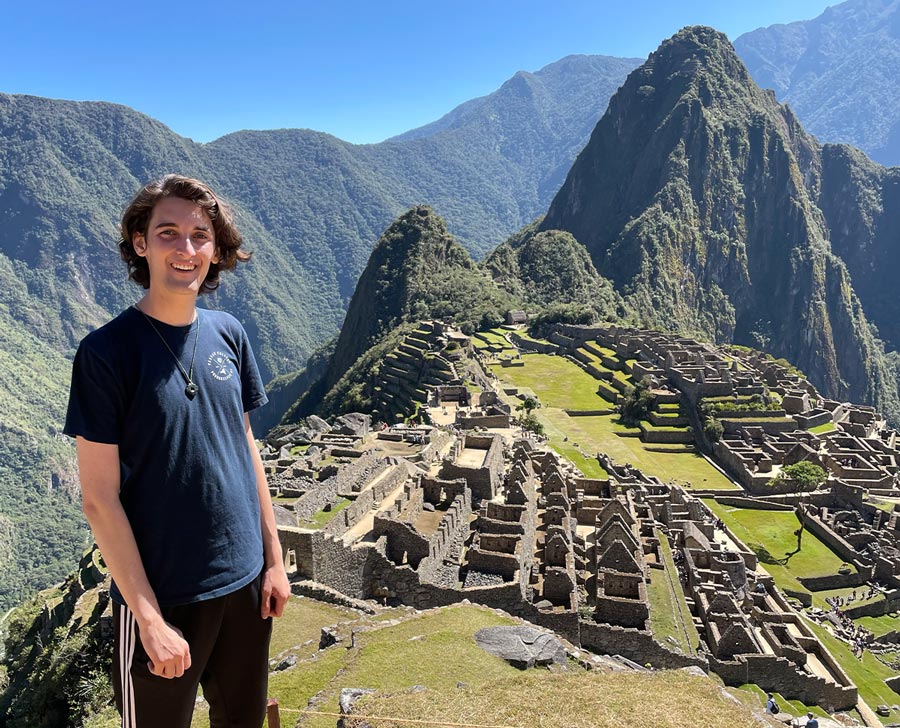
Simon Lewis ’25 was a recipient of a Cornelisen Fellowship that took him to Peru in the summer of 2022. He spent a junior semester abroad in Chile during spring 2024 and is now one of four Vassar students to receive a Fulbright scholarship in 2025. Each year, the prestigious U.S. government–sponsored Fulbright award supports international academic exchange programs, providing approximately 9,000 merit-based scholarships in the United States and more than 160 countries to accomplished students, scholars, teachers, artists, and professionals from all backgrounds and fields.
Simon Lewis ‘25 standing above Peruvian ruins during his time abroad.
Simon Lewis ’25 during his Cornelisen Fellowship in Peru.

Image courtesy of the subject

“Since 2004, Vassar has been a top producer of Fulbright awards and of Watson Fellows, which are awards for graduates to pursue original projects outside of the United States for one year,” explained Fellowships Director Olivier. “Vassar students who apply for these fellowships are supported beyond the classroom by dedicated faculty, advisors, and administrators all working toward the goal of making sure students are globally engaged and capable of fulfilling their missions of furthering mutual understanding.”

Lewis, an international studies major, chose to work in Colombia as an English Teaching Assistant as a way to explore his diverse interests, including migration (Colombian communities have welcomed millions of Venezuelans), as well as the country’s reputation as home to the most diverse bird population in the world.

Lewis’s love of teaching developed during his time at Vassar when he worked with Hispanic and immigrant communities in Poughkeepsie. He teaches English classes at the Universidad Cooperativa de Colombia’s Pereira-Cartago campus and volunteers at museums and public schools.

“At Vassar, my professors helped me explore the implications of what it means to teach English abroad,” he said. “They challenged my thinking about why I would apply for such a prestigious award and helped me understand how to do good in the world and become part of a country and a community outside of school.”