

Elizabeth Randolph / Courtesy of the subject
The Fight for Democratic Values and Civil Rights Will Rely on Younger Generations, Alum Speakers Say
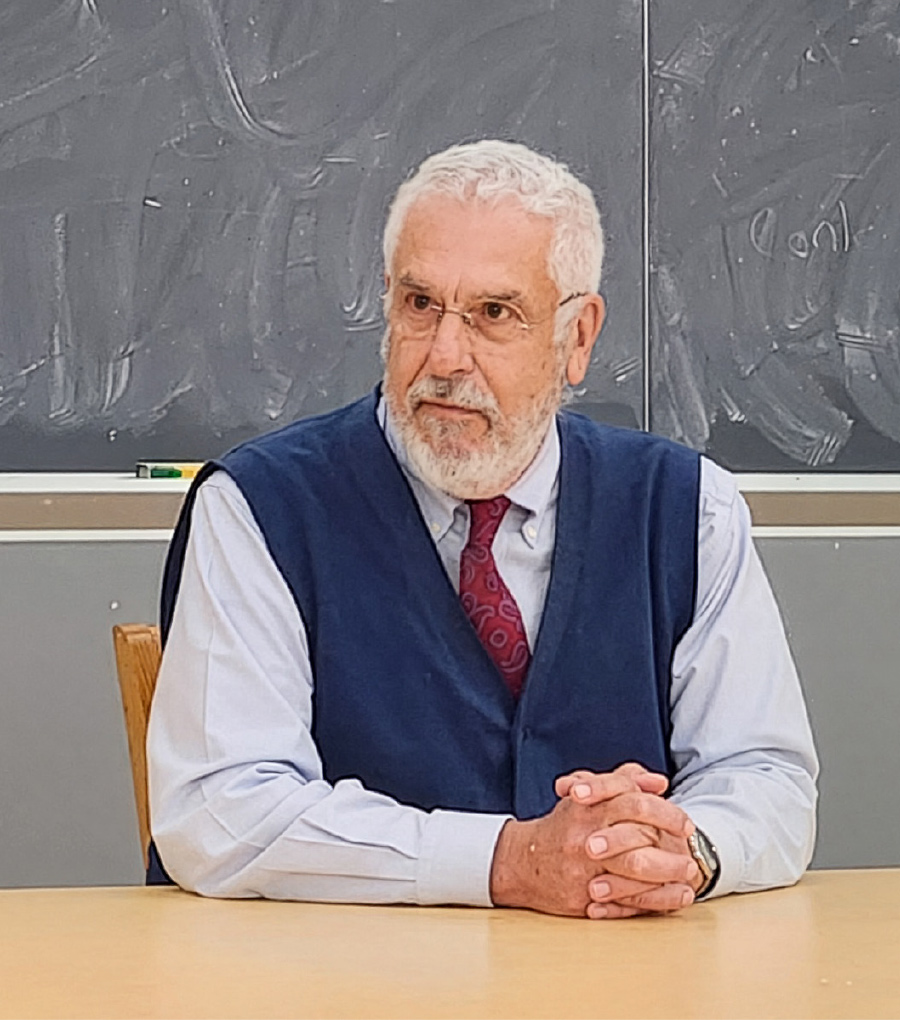
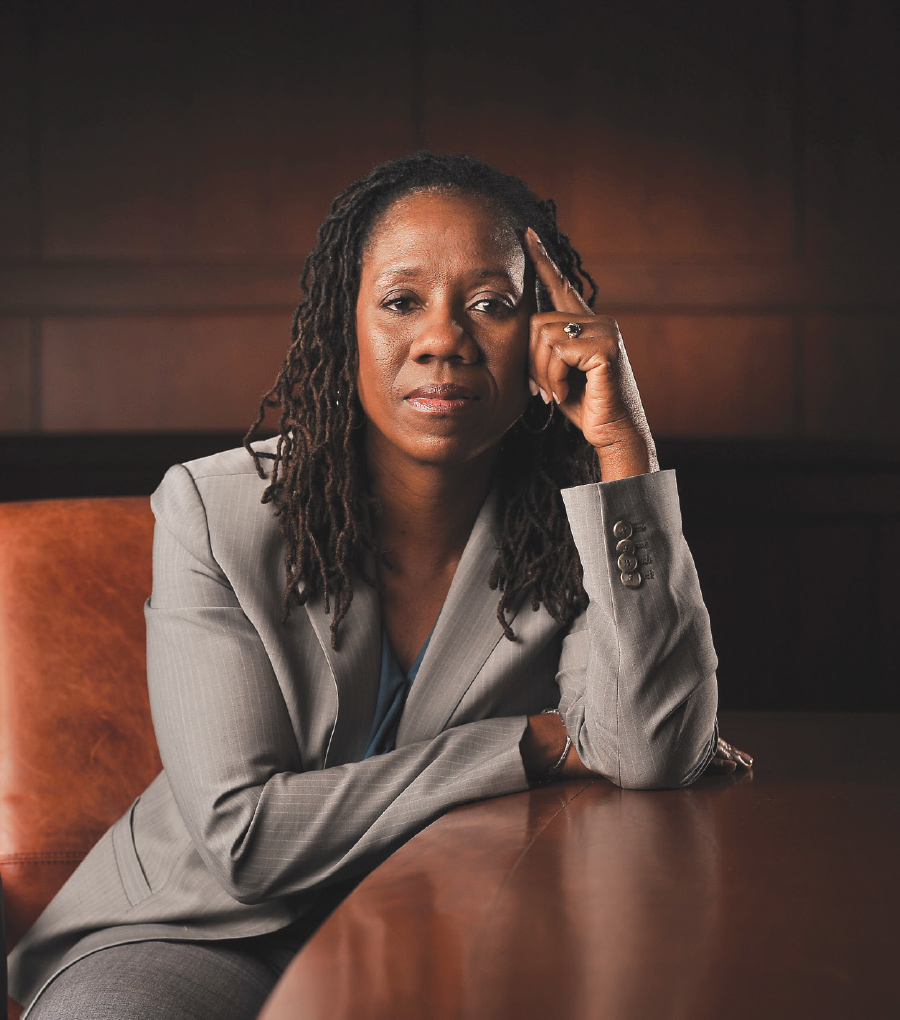
Cash is the Executive Director of The Steady State, a nonprofit advocacy organization whose members are former senior national security officials from across the intelligence, diplomatic, homeland security and defense communities. His career has included stints with the Central Intelligence Agency, the Department of Homeland Security, and the staffing of several congressional committees that oversee and assess national security issues. Ifill is the Vernon Jordan Distinguished Professor in Civil Rights at Howard University School of Law, and formerly served as President and Director-Counsel of the NAACP Legal Defense and Educational Fund.
During a conversation with students and others in Rockefeller Hall, Cash offered a sober assessment of threats to constitutional democracy in the U.S. His conclusion? The country is facing the gravest threat to its constitutional democracy since the Civil War.
His prior roles have often involved tracking what he called “indicators” of emerging autocratic forms of government in countries around the world. “We are seeing all of these indicators here right now,” he explained. They include taking control of the security apparatus, identifying “enemies” within the country, and threatening the media, legal professionals, and business communities, as well as institutions of higher learning. Colleges and universities are targets, Cash said, “because you guys are the Kryptonite of autocracy.” He also expressed concern about voting rights and free and fair elections.
Cash said it will take a sustained effort from young people and others across the country to preserve democracy, and today’s liberal arts students are well positioned to push back. “Use your critical-thinking skills,” he urged. “You are already being trained to collect and analyze data.
“I still have confidence that all is not lost,” Cash concluded, saying it is up to every individual to assess their own level of comfort with risk and their willingness to step forward to counter authoritarianism. One way would be to form coalitions with people from a broad political spectrum, he said, to engage people with whom we disagree and find common ground.
During an October program in the Villard Room, Ifill expressed similar concerns—and optimism. A civil rights leader for more than 30 years, she has been involved in countless civil rights cases across the country. She has seen civil rights expand and contract in her lifetime and throughout history, and said that we are currently in a period of retrenchment.
During a campus interview by Professor of Sociology Diane Harriford, Ifill noted that “Something very ugly has been unleashed in this country. There are days when I am furious, and I can’t imagine not being furious. But I remember the tireless work people before me did to make this work possible.”
Likewise, Ifill said, it is incumbent upon veteran civil rights leaders like herself to make room for the next generation. “There is the harvest. And we have reaped the benefits of the harvest,” she noted, but said we must also “plant the seeds” that bring forth the next cohort of civil rights leaders.
Ifill said the history of the nation had provided her with hope for the future. She praised the men and women who worked tirelessly, often putting themselves in harm’s way, to get the Civil Rights Act passed and said, “I believe we can do it again. We can be founders and incubators of new ideas that translate into a new reality.”
Ifill’s forthcoming book, Is This America?, is an examination of race and the current crisis in American democracy. It will be published in 2026 by Penguin Press.