

Art, Reflection, and the Gift of Time
n higher education, we often find ourselves speaking a language of urgency. Our days are painfully punctuated with paper deadlines, exam dates, and distracting social media alerts about the latest shock-value news. In a world that feels increasingly fractured—riven by social, political, and technological upheaval—the instinctual response is to take action.
As an institution dedicated to the liberal arts, however, Vassar posits that growth comes from reflection and restoration, which require something the contemporary world seems least inclined to offer: time.
In this issue, we focus on the unique role of the artist in such fraught times. Through alum-related residencies and fellowships, the Vassar community continues to champion the freedom of the mind. Whether it is through the serene landscape of Catwalk, founded by Purcell Palmer ’62; the storied legacy of Vassar’s W. K. Rose Fellowship; or the breathtaking solitude of Zion Canyon Mesa, directed by Logan Hebner ’78, these programs offer a rare and radical gift: the permission to be unfettered.
While some may view artist residencies as luxuries, such opportunities are essential to our common humanity. The residency can provide a sanctuary for experimentation and the productive failures that often precede transformational breakthroughs. When artists pursue their work, they are not escaping the world’s fractures; they are developing the vision that may help us bridge them and ultimately heal.
The founders and stewards of these programs understand a fundamental truth at the heart of Vassar’s ethos of learning: that the ability to experiment and readjust is not a detour from life’s work—it is life’s work. Such residencies and fellowships help ensure that the next generation of creators has the support to think deeply, to discover new approaches to living together, and to remain free.
This commitment to the arts is a commitment to our shared humanity. It is a recognition that we are capable of profound endurance and creative transformation when given the room to breathe. As you read about the remarkable work emerging from these opportunities, may they remind us of time also shared on campus, where the arts continue to flourish and where experimentation, self-discovery, and growth frame time spent in nature amid the 100-year-old arboretum and meandering walks that take us to new places.
When communities fracture under the weight of injustice or political unrest, art provides a common language to process collective trauma, translates raw pain into meaningful expression, and reminds us of our shared humanity when everything else threatens to pull us apart. The stories that follow remind us how the liberal arts and Vassar continue to animate our lives even decades after graduation. As you read the pages ahead, I hope you feel a sense of pride and promise, as I do.
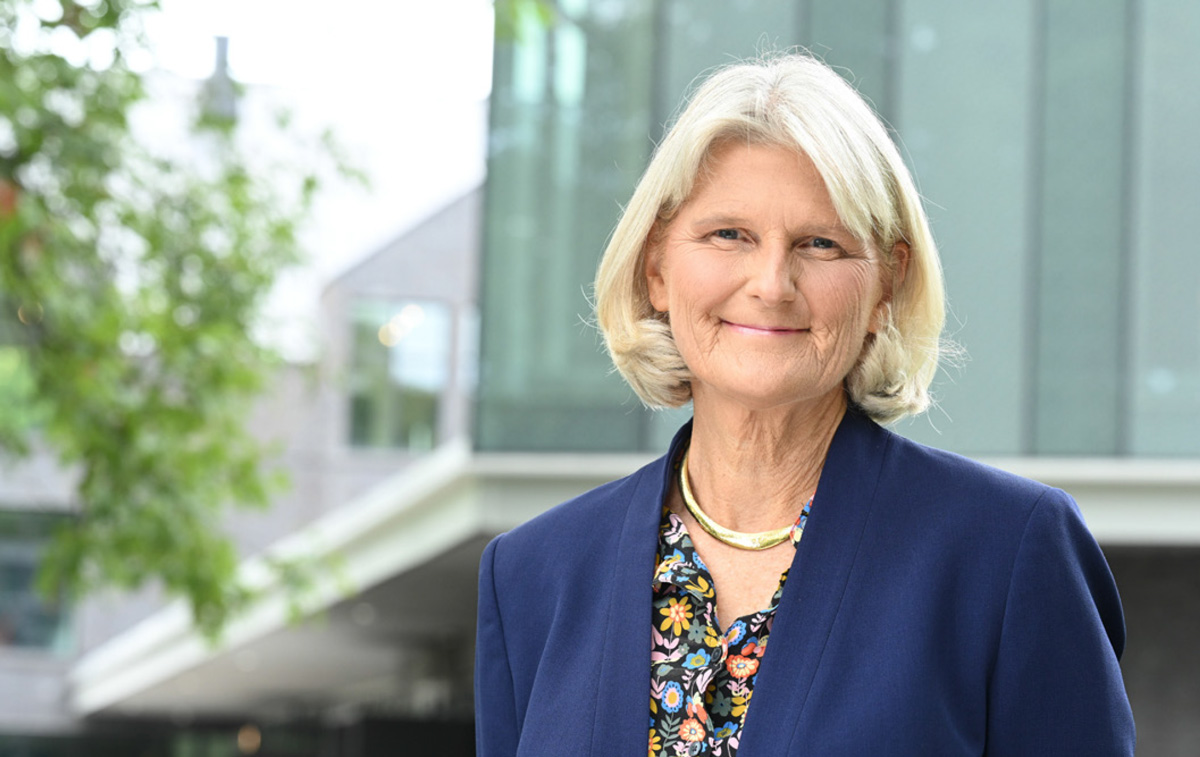

Elizabeth H. Bradley
President