

Phyllis Klaus ’57: Doyenne of Doulas
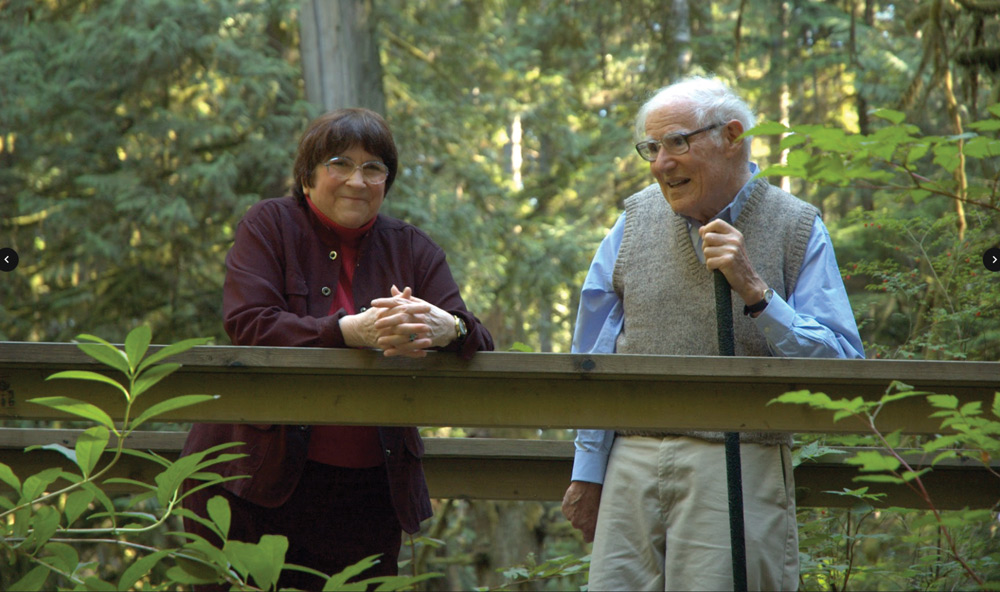
“We need to be open to many different experiences that make a difference for somebody,” Klaus said.
At Vassar, Klaus’s studies often took her to the Wimpfheimer Nursery School, where, with parents’ permission, she and her classmates observed babies’ developmental milestones. She even had the memorable opportunity to meet—and hug—Eleanor Roosevelt during a campus visit. Klaus also helped with College recruitment efforts.
College brought out Klaus’s activist side; she occasionally traveled to New York City to march for causes she and her classmates believed in. Though she’s no longer able to march, she wishes she still could.
After graduating, Klaus became a licensed marriage family therapist and social worker. She had three children from her first marriage: Geoffrey ’82, John, and Jocelyn Stoller (who passed away). Though that marriage ended, her second marriage to neonatologist Dr. Marshall Klaus was, in her words, “one of the most wonderful gifts that the universe could ever give me.” Marshall, who passed away in 2017 at the age of 90, shared Phyllis’s passion for improving maternal and newborn care.
Klaus became part of a transformative moment in maternal care. Working alongside Marshall and pediatrician Dr. John Kennell in Guatemala, she helped turn a breastfeeding study into a groundbreaking exploration of emotional support during and after childbirth.
Marshall saw a change in the women Phyllis was working with versus those visited by other people. Phyllis’s gentle words and compassionate presence noticeably improved the women’s labor experience.
The team’s investigation into this phenomenon led Marshall to Dana Raphael, who coined the term “doula,” an ancient Greek word meaning “a woman who serves,” to describe this critical support role. Through meticulous research, including studies on “non-talk, non-touch” doulas, Klaus, Marshall, and their colleagues found that emotional support could dramatically improve birth outcomes, challenging medical norms.
In 1992, along with their colleagues Penny Simkin and Annie Kennedy, the Klauses and Kennell founded DONA International, an organization dedicated to promoting doula care. Simkin, Kennedy, and Phyllis Klaus also founded PATTCh (Prevention and Treatment of Traumatic Childbirth) in 2007 to expand awareness of trauma’s effects on childbearing people, care teams, and communities. Klaus also coauthored several influential articles and books, including The Doula Book, When Survivors Give Birth: Understanding and Healing the Effects of Early Sexual Abuse on Childbearing Women, and Your Amazing Newborn.
During the pandemic, in her mid-to-late 80s, Klaus pursued another dream of hers: getting her PsyD.
“I had always wanted to do it, but was always too busy doing other things. I feel really good about it and proud. I hope it can be helpful,” said Klaus, who continues to consult with patients and speak at conferences. “I’m putting some of my body, mind, and spirit techniques of working with trauma and memory, to be able to explore those aspects of one’s life and how it has affected the way one lives.”
“I am just so impressed by and inspired by [Klaus’s] commitment toward some of the most vulnerable people,” said Elizabeth Geras Paruchuru ’05, Klaus’s Embracing Every Chapter nominator and COO of When Survivors Give Birth, a program founded by Klaus that trains professionals to support pregnant, birthing, and postpartum trauma survivors. “She has helped so many families start out on the right foot … I feel beyond privileged to be a part of keeping that legacy going, and it feels fated that we are both Vassar girls.”
For more information about Klaus’s work, visit bondingandbirth.org. Know of an alum from an earlier class—pre-1975—thriving and living an extraordinary life? Let us know!