

Vassar Goes to the Source Over Spring Break
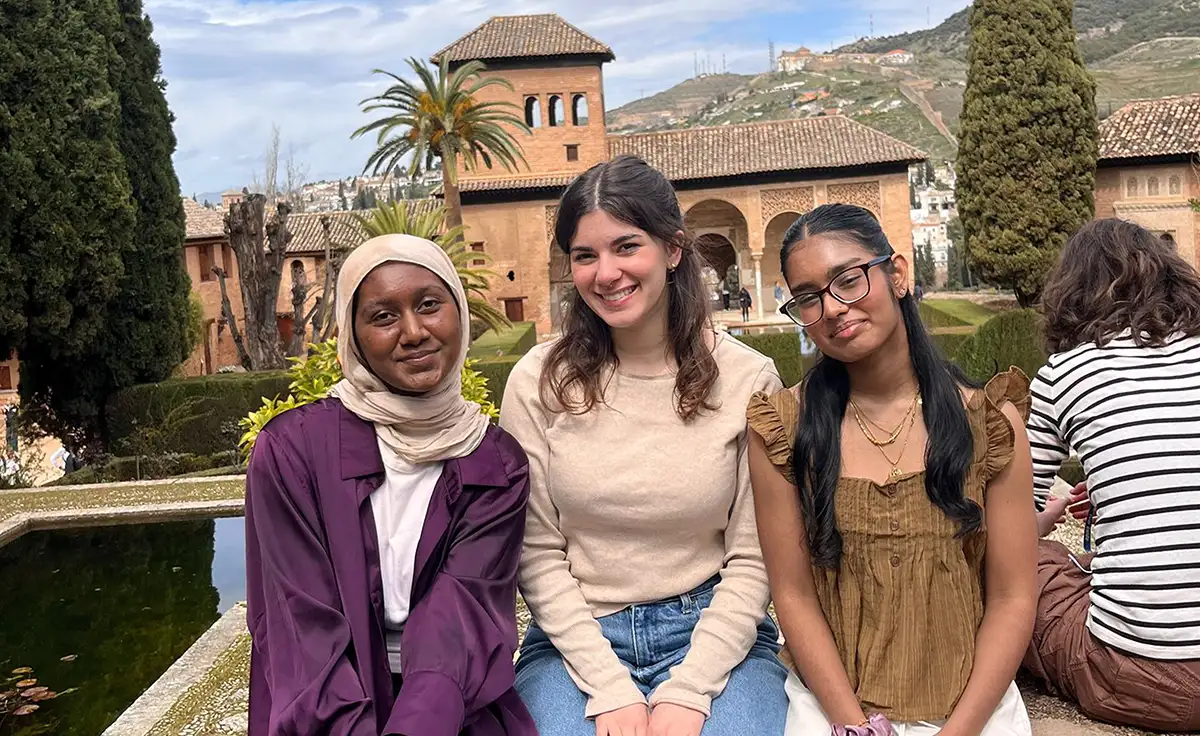
Jewish Studies Travel Seminar in Spain
Epstein said a particularly profound moment occurred when the group was gathered in a synagogue crafted in the Mudéjar style (preserving or reviving Muslim design motifs in Christian Spain) that had been transformed into a church during the persecution and expulsion of Spanish Jews. “Surrounded by a now-intimate group of students, who had once been strangers but were now deeply connected, I felt a sense of unity,” Epstein recalled. “Some wore kippot, others fasted for Ramadan in hijabs, and one had just been seen in rapt genuflection at the cathedral. I sang for them in Hebrew the psalm that was inscribed on the Muslim-design-inspired wall in beautiful Hebrew letters, in the melody that would have been used in this very place before the Expulsion. It was an immensely moving experience and embodied the essence of what we strive to achieve with students in Jewish Studies at Vassar.”
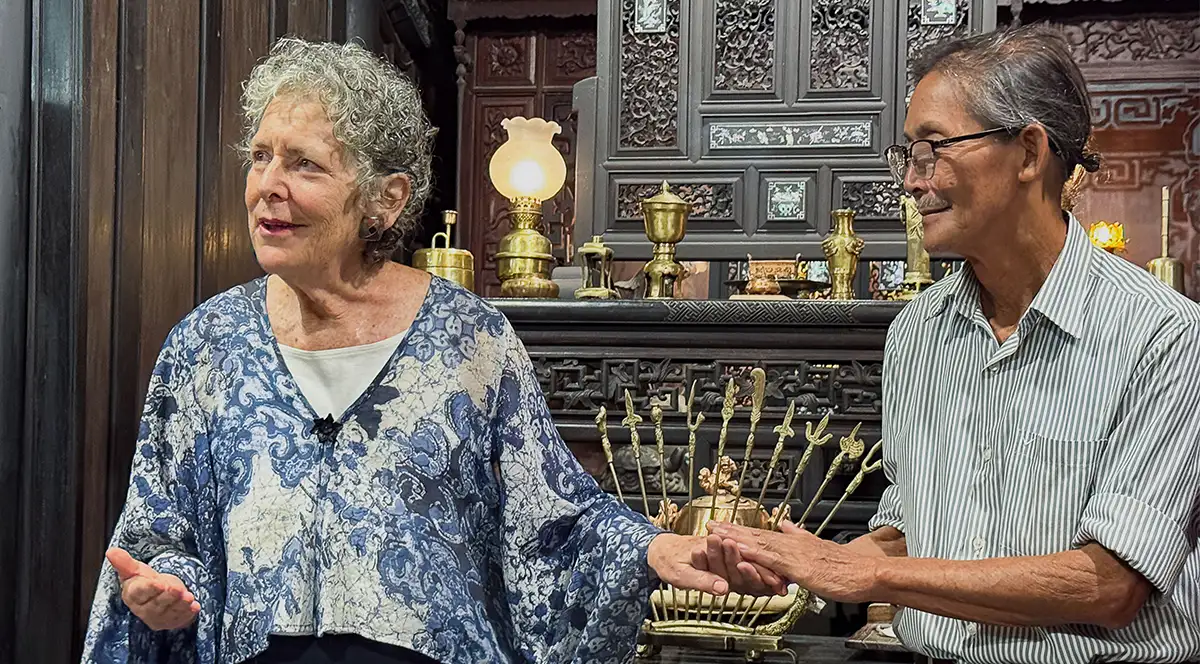

History and Culture of Vietnam
The group of 30, mostly alums and family, spent five days in Hanoi meeting with U.S. embassy staff, exploring historic sites, and viewing art. They then flew to Hue, where the longest urban battle of the war took place. “We retraced my father’s footsteps during the 1968 Tet Offensive in Hue,” noted Brigham. “My father, U.S. Marine Corps Sergeant Bruce Allen Atwell, was a combat photographer and took some of the most iconic shots during the Tet Offensive.” Brigham, who has been using Atwell’s photographs in his courses on Vietnam for many years, only recently learned that the photographer is his biological father and will soon publish a book about this.
The group then drove to Hoi An, an ancient seaside town. The last stop was Saigon, where the group toured the Presidential Palace, the War Remnants Museum, art galleries, the Cu Chi Tunnels, and even the Mekong Delta. They also met with the president of Fulbright University. “It was a magical trip,” said Brigham, “a trip filled with history, art, economics, politics, and culture.”
Vassar Trustee Robyn Field ’86 agreed. “Traveling with Professor Bob Brigham and his wife, artist Monica Church, was incredibly special, as we were treated to so much insight and detailed stories about the history, politics, and culture of Vietnam,” Field said. “We had insider access to places we would never have had the opportunity to see without Bob and Monica and our Vassar connection. Vietnam’s landscape was beautiful, the people were warm and engaging, and the food and culture were amazing. A highlight was sharing in the personal family history and stories of the Vietnam War through Bob’s perspective. And, it is always a pleasure to meet and get to know generations of Vassar alums.”
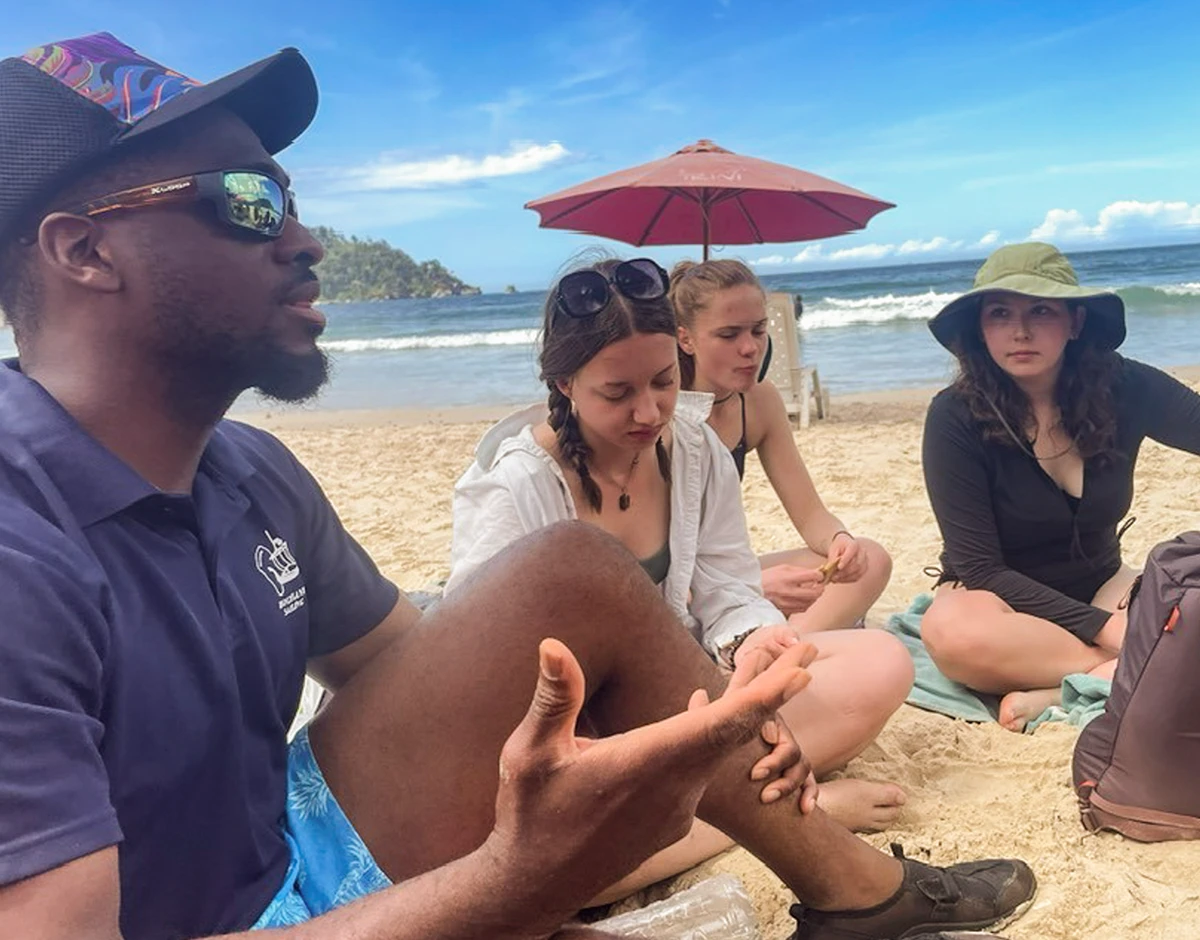
Earth Science and Environmental Studies in Trinidad and Tobago
A main goal, said Schneiderman, was to avoid “parachute science,” whereby “foreign researchers swoop in, disregard people with on-ground experience, and give little to no credit to local collaborators on published works.”
Students described the trip as unforgettable. “This trip was incredibly special to me because it was my first time visiting Trinidad and Tobago, where my family is from,” said Namdeo. “I had the chance to see the houses my parents grew up in and meet relatives I’d never met before, which was deeply fulfilling on a personal level. It was equally enriching academically, as I was able to engage in meaningful, hands-on learning by applying scientific concepts to a place that holds so much personal significance. The experience was both intellectually and culturally transformative; it will stay with me forever.”
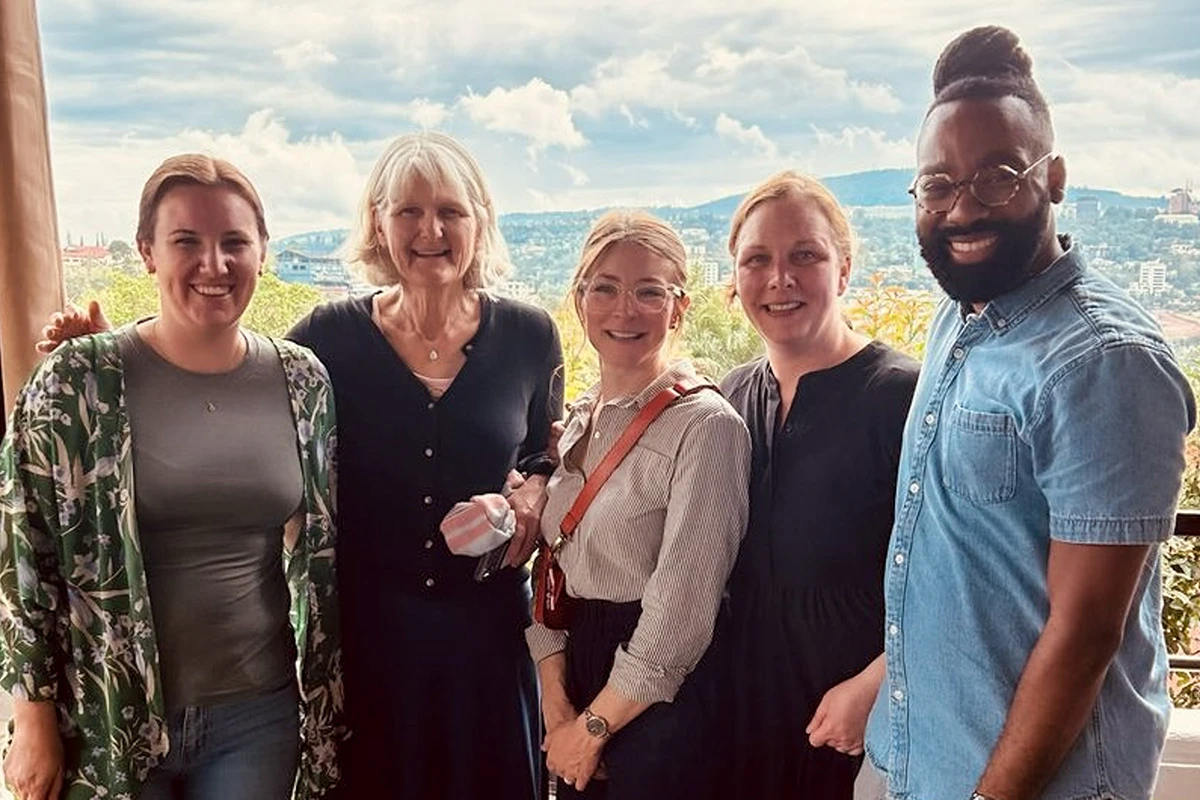
Courtesy of President Elizabeth Bradley
The Global Collaborative for the Liberal Arts in Rwanda
Besides Bradley, the Vassar delegation included Deputy to the President Wesley Dixon; Adjunct Instructor in Science, Technology, and Society Christie VanHorne; Associate Professor of French and Francophone Studies Anne Brancky; and Ingrid Munezero ’28, a Vassar first-year student and Global Collaborative intern from Rwanda whose sister is a medical student at UGHE.
Munezero said that during the course of the week that she was in Rwanda, she gained a new appreciation of the liberal arts model of learning, in which acquiring knowledge is a collaborative process among faculty and students, when she heard UGHE students describe how much they believed it was helping them become better doctors. She said the trip had made her thankful that she is getting a liberal arts education, which she had previously “taken for granted.”